
Shmuel Hanavi zt"l
הרב שמואל בן אלקנה זצ"ל
Iyar 28 , 2982
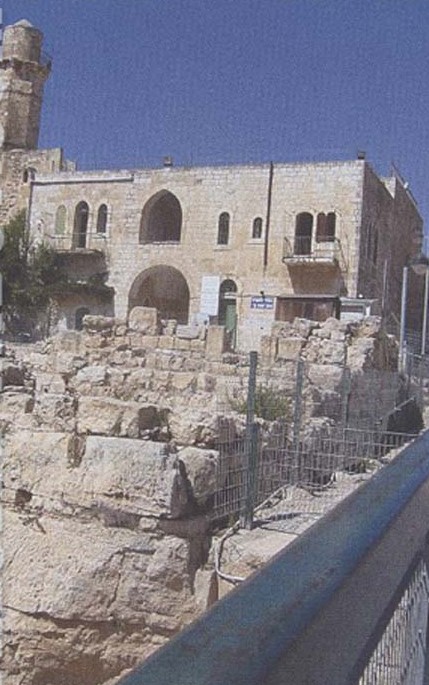
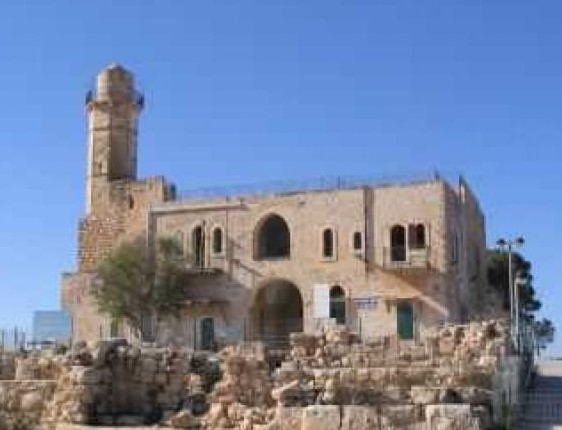
Shmuel Hanavi zt"l
Son of Elkana and Chanah
(The yahrzeit, according to Shulchan Aruch: 28th of Iyar; according to Megillas Taanis: 29th of Iyar)
Divrei Torah of Shmuel Hanavi zt"l

toras haarizal and gilgulim about shmuel hanovi
Rav Yitzchok Badrashi of Saloniki writes in his sefer, Harei Besamim on parshas BeShalach (cited in Rabbi Vanunu’s sefer, Sharvit HaZahav, on the life of Shmuel HaNavi, by):
In order to understand why Eli suspected Chanah [of being drunk], we need to understand this matter in light of the teachings of our master the Arizal:
Chanah's husband, Elkana, contained a spark from the soul of Adam HaRishon as it says, in Shmuel 1:1, “There was a man from Ramasayim,” which means two Ramos - two heights. Understand this.
His wives, Chana and Penina, were reincarnations of Adam's two wives: Chana corresponds to the second Chava, whereas Peninah corresponds to the first Chava [also known as Lilith].
It is known that Chava's sin was that she gave Adam grapes and now when she came back as a gilgul, it was to fix and rectify the matter that the serpent had contaminated and defiled her.
Therefore, Chana was barren and childless to rectify the sin which caused the serpent to contaminate and defile her.
The first Chava [Lilith] had ten children because the strength of the forces of darkness, known as the husks and shells of impurity, overcomes the fruits of holiness.
When Chana realized this, she cried and wept, davening to rectify her sins by repenting and doing teshuvah. This is why the pasuk says she was maras nefesh, her soul was embittered over her past misdeeds from her past lives.
Therefore, her name is Chana which has a similar spelling to Chava except that there is a letter nun in place of the letter vav.
Chana also means to find favor – chein [alluding to her rectification].The concept of rectification is alluded to again in her name as it also spells an acronym by way of the roshei teyvos-- initial letters--which spell: challah, nida, hadlakah [ חנ''ה = חלהת נדהת הדלקה ]
This corresponds to the three transgressions she committed when she damaged the soul of Adam, as our Rabbis said: “She snuffed out the light of the candle of the world; Adam was the first challah, taken off and separated from the earth of the world etc.”
Therefore, when Eli saw her, he said, “until when will you be drunk, remove your wine, i.e. I see that the previous past life's sin caused by wine. Drunkenness stain remains upon you; it has not yet been atoned for and forgiven by all of your fasts and self-affliction. "
Chanah responded, “No sir, I am a hardened spirit – Isha kashas ruach."
[In other words] the aspect of the ruach has not yet been rectified; it remains hard and has not been fixed and softened. The aspect of neshama, however, has been rectified as is evident in Chanah’s next statement: "And I poured out my soul (nafshi) before Hashem; do not assume your maidservant to be an evil woman" [the bas blial-- the evil woman pains and distresses me and she caused me] "that I spoke and was angered," [because of what I did in the past] "of what I spoke of until now."
Based on all of this, you can understand the statement that the Satan’s and Penina’s intentions were for the sake of Heaven. At first glance, what connection is there between the two? How is Penina compared to the Satan?
We know from the Zohar's parable about the king who hires a harlot to try and seduce his son, the prince, that the Satan's intentions, whenever tries to seduce us into transgression, is to test us to see if we withstand the temptations of sin. Soo too, Satan seduced Chava [to test her] and now in reincarnation [in the form of Chanah], returns to cause her pain and anger to prevent her from rectifying and fixing her past misdeeds. As in the parable of the [test arranged by the] king for the prince, overcoming the temptation is cause for both man and his Satanic tempter to rejoice.
This is why we say they both had noble intentions for the sake of Heaven and this is why Chanah merited to give birth to Shmuel haNavi who is equal to both Moshe and Aharon, and Kayin and Hevel. These matters are deep and [appear deceptively] inverted in such a way that we cannot even write down and explain further in writing.
MISHNAYOS MESECHES NAZIR CHAPTER 9 MISHNAH 5
מסכת נזיר פרק ט משנה ה
INTRODUCTION
The concluding Mishnah of Mesechta Nazir discusses the case of Shmuel HaNavi and whether he was a nazir or not which is a dispute among Chazal.
The Tosfos YomTov says that since this was a machlokes when Rav Yehuda HaNasi redacted the Mishnayos, he left this case open for the concluding Mishnah of our Mesechta. The dispute revolves around the definition of the word “mora” in pasuk Shmuel Alef 1:11 where Shmuel’s mother, Chanah, vows to Hashem that if He accepts her tefillos and grants her request for a child, she will dedicate that child to Hashem all the days of his life and no “mora” shall be on his head.
What does mora mean? The word has two definitions: it means a razor to shave with or fear, as in, mora Shomayim, fear of Heaven. This dispute has practical ramifications--a nafka mina, that we shall see follows in our Mishnah:
TEXT OF THE MISHNAH NAZIR 9:5
Shmuel was a nazir [all his life] according to Rabbi Nehorai as it says [in the pasuk that Chanah vowed that] “no mora – razor shall be lifted to his head.” (Shmuel I 1:11)
The practical nafka mina to this opinion according to the Bartenura is that we can apply it as the ruling in the Mishnah 1:2 which describes the case that if someone says, “I am hereby like Shmuel, or like Ben Elkana, or like he who cut [applying the definition of mora as razor] off the head of Agag in Gilgal, then he is hereby a nazir olam --and so is the halachah.
[This proves Shmuel was a nazir by the following rule:] Regarding Shimshon it states that the angel said to Manoach’s wife that no mora – razor should be lifted to Shimshon’s head because he will be born a nazir. And it uses the word for razor as] “mora,” (Shoftim 13:5). And regarding Shmuel, it says “mora,” [as we just quoted above]. Just as the definition of mora by Shimshon is a razor because he was forbidden to shave his hair being that he was a nazir, so too does the definition of mora used in connection with Shmuel [mean a razor and this] proves he was a nazir.
The counter opinion-- Rabbi Yosse’s-- says, mora means fear, [referring to that Shmuel shall fear no flesh and blood human being, but only fear Hashem all the days of his life.]
Rabbi Nehorai [argues in response to Rabbi Yosse] pointing out that it already says in Shmuel א (16:2) that Shmuel asks, “How can I go? If Shaul will hear of it, he will kill me” [which proves he in fact feared a person and not just of Hashem]. How then could Chanah’s prayer not have been answered? According to you, challenges Rabbi Nehori, she asked Hashem that no fear of any human being apply to Shmuel [and for such a request, how could it be that] she was not answered by Hashem? This disproves your claim that the definition of mora as “fear” applies in this context; rather it must mean a “razor” and that Shmuel HaNavi was in fact a nazir.
The Bartenura rules that the halachah follows Rabbi Nehorai’s opinion that Shmuel HaNavi was a nazir.]